A simple place for your practice
How to prepare a small or temporary space of your own with the items you already have.
You don’t need a special room to mark a moment of pause. A comfortable chair, a clear surface, or an object you can put away afterward may be enough. This guide suggests observing how you use the space before buying anything for it.
These texts are under editorial review. Their references and content will be checked before they are published as approved guides.
Chamanismo y Holística Editorial Team · October 7, 2026
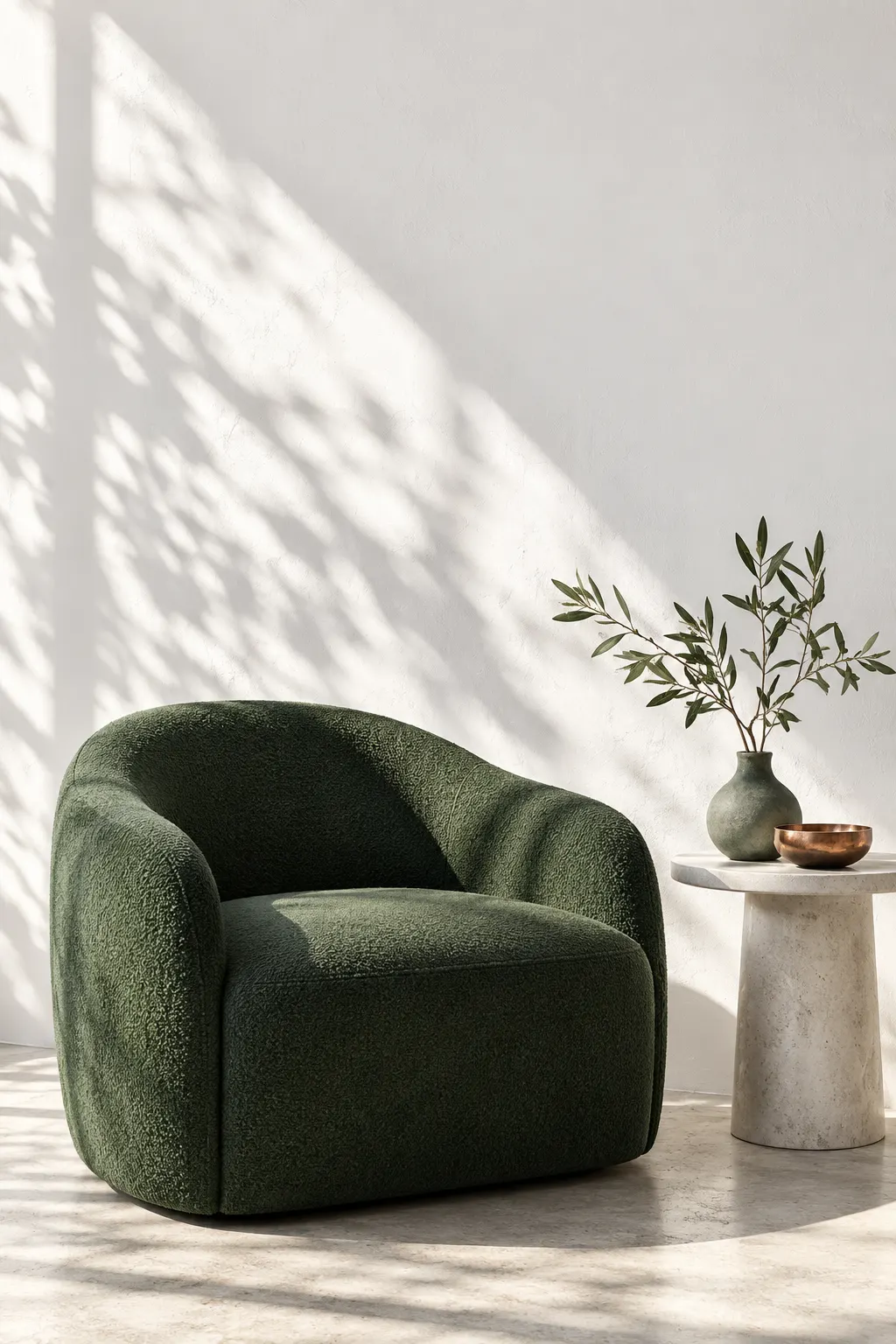
Why having a space of your own helps
The psychology of habits has shown that repeated behaviors tend to become associated with the context in which they happen: the same place, the same time, the same cue. That’s why having a familiar place for your practice may help you return to it, without having to rely on willpower each time.
You don’t need an entire room. A corner, a chair by a window, or a cushion on a rug may be enough. What matters is being able to return to the same place.
Choose the location
Find a place where you’re unlikely to be interrupted and can sit comfortably. If you can, avoid places associated with work or screens: it’s harder to shift into a different state in a place that already means something else to you.
If you share your home, let the people you live with know your practice schedule and agree on a simple signal, such as a lamp being on.
Reduce before adding
Clear away distractions: screens, pending paperwork, objects unrelated to your practice. A simple space invites you to pause more than a cluttered one.
Then add only what you truly use.
- A notebook and a pencil.
- A comfortable chair or cushion.
- A plant or a branch, if you like.
- A safe candle or a warm lamp.
- An object to remind you of your intention.
Light, sound, and texture
Natural light is usually best. At night, use a warm, low-intensity lamp. If you listen to audio, test the volume before you begin and use headphones if there’s noise.
A blanket or cushion you enjoy touching can help your body recognize the place as a place of rest. If you use candles or incense, ventilate the space and never leave them unattended.
A small entry ritual
Define a brief gesture to begin: turn on the lamp, take three breaths, open your notebook. Repeating it helps associate the space with the practice.
Also define an exit gesture, such as closing your notebook and turning off the light. Marking the end helps keep the practice from spilling into the rest of the day.
Illustrative example
As a made-up example: a person who lives in a small apartment chooses a chair by the window and a shelf within reach. They remove the charger and papers, put out a notebook, a small lamp, and a plant, and decide to practice for ten minutes after dinner. By the third week, they notice that simply sitting in that chair is enough to shift their focus.
Keep it alive
Check the space once a month and keep only what still feels meaningful to you. If you don’t use it one day, that’s okay: the space is there for when you want to return, not to demand consistency from you. And if it starts filling up with things, that’s a good sign to remove something rather than add more.
If you have limited space
A practice space can be a portable box: inside, a notebook, a pencil, headphones, and an object you like. When you open it on the bed, table, or floor, taking out the box marks a shift in attention, and putting it away frees up the space for other uses.
Another option is to use the same corner as always but mark the beginning with a small signal: a specific blanket, a small lamp, or a gentle scent you use only at that time.
With a zero budget
You don’t need to buy anything to get started. A cushion from your couch, a cup, a plant you already have, a sheet of paper, and a pencil will do. New items can wait until you know what you really need: buying things to get started can feel like progress without building the habit.
If you want to add something over time, first choose what will improve your comfort (lighting, support, quiet) rather than something decorative.
Frequently asked questions
Do I need an altar? No: an altar is a personal or cultural choice, not a requirement for having a space to practice. Can I share it with other people? Yes, as long as you agree on times and respect the break of whoever is using it. What should I do if I can’t keep it tidy? Reduce the number of objects until the space is easy to maintain: a space that takes a lot of care eventually gets abandoned.
How to tell whether your space is working
A space works when it’s easy for you to get started. If it’s hard to get to, it may be too far away or too cluttered; if you get distracted when you sit down, there may be something to remove or move. Try it for a week, note what got in your way, and adjust one thing at a time.
Over time, the best indicator is that the site invites you in on its own: the lamp, cushion, or notebook reminds you of your practice without effort and doesn’t become one more obligation.
The space serves your practice, not the other way around. If your routine changes, you can also change how you prepare it.
Readings for comparison
- Wendy Wood and David T. Neal, «A new look at habit and the habit-goal interface», Psychological Review (2007).