Listen to a guided practice at your own pace
How to choose a safe time, listen to a sample, and adjust your listening without expecting a particular answer.
Following a guide does not mean giving up your comfort. You can listen with your eyes open, pause, or stop. This reading helps you prepare for the moment and choose a practice without turning relaxation into another task to complete.
These texts are under editorial review. Their references and content will be checked before they are published as approved guides.
Chamanismo y Holística Editorial Team · October 7, 2026
What is guided relaxation?
A guided relaxation is a recording in which a voice suggests, step by step, directing your attention to your breathing, body, or an image. There are very old attention practices and contemporary traditions, such as progressive muscle relaxation, which Edmund Jacobson developed starting in the 1920s and presented in his 1938 book, as well as breathing and attention exercises that have been shared since then.
The audio on this site consists of short guided relaxation practices. It is not clinical hypnosis or treatment, and it is not offered to treat illnesses.
Listen in a safe place
Always listen without driving or doing tasks that require attention, such as operating machinery or cooking over an open flame. You can keep your eyes open, change positions, or stop the audio at any time.
You don’t need to achieve a particular feeling. If your mind wanders one day, return to the voice without judging yourself: each return is part of the practice.
Choose the time
A calming practice may fit at midday; a rest practice, at the end of the day. If you’re looking for focus, listen to it before starting an important task, not during it.
Consistency matters more than duration. Five or ten minutes at the same time over several days is usually more sustainable than an occasional long session.
- Calm: midday or breaks between tasks.
- Rest: at the end of the day, with your phone away.
- Focus: right before you start work.
- Trust and intention: in the morning, with a few lines in your journal.
Prepare the space
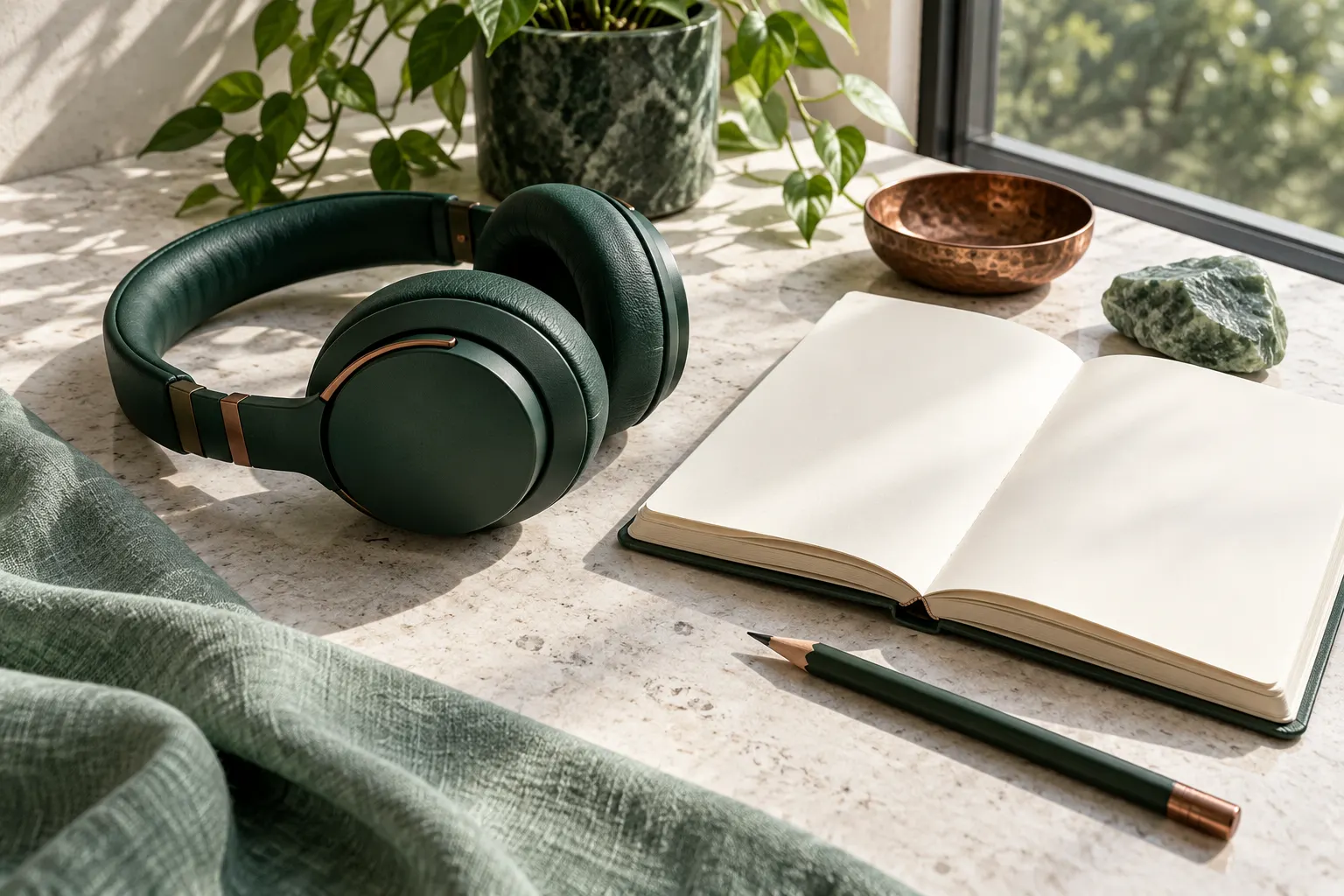
Turn off notifications and choose a comfortable support. Headphones may help if there’s noise, but they’re not essential, and it’s best to avoid high volume.
Keep a notebook nearby to write down in one line how you felt before and after. Don’t do it to measure yourself, but to remember what helped.
A simple seven-day plan
If you want to try it consistently, a reasonable plan is: day one, listen once without expectations; days two and three, listen at the same time; day four, change locations to see if anything changes; days five and six, add a line to your journal; day seven, reread your notes and decide whether you want to continue and how often.
If you can't do it one day, don't make it up: resume the next day. Turning the practice into an obligation takes away its meaning.
Illustrative example
As a made-up example: a person with long workdays decides to listen to a relaxation audio every night for a week. For the first few days, they get distracted thinking about things they need to do; on the fourth day, they notice that they recognize tension in their shoulders sooner. They don’t expect dramatic results: they observe that the habit gives their day a sense of closure and makes it easier to put down their phone.
What they are not and when to stop
These are not a medical or psychological treatment. If you feel discomfort, dizziness, or intense distress during a practice, stop the audio and take a break. If the discomfort returns, consult a healthcare professional. If you are experiencing a crisis, seek immediate professional help: an audio cannot support you through that moment.
What to expect and what not to expect
There’s no single feeling you need to reach. Some people notice calm, others feel sleepy, and others simply realize how restless they were. All of that is part of the practice. The mind often wanders: what you’re practicing is the act of returning, not staying perfectly focused.
The first few times may feel uncomfortable, especially if you’re not used to sitting still. You can start with your eyes open, gazing softly at a fixed point, and try closing your eyes later. If any instruction doesn’t feel comfortable, skip it.
If you fall asleep
This is common, especially with rest practices. It doesn’t mean you did anything wrong. If your goal is to sleep, this may be just what you need; if you want to stay awake, try sitting upright with your back straight, at a time when you’re not exhausted.
If you use the audio to fall asleep, set it to stop when it ends and place your phone away from the bed.
Frequently asked questions
Can I repeat the same audio? Yes: repeating a familiar practice lets you notice more nuances and is often more comfortable than switching every day. When should I change the audio? When the current one feels automatic or when your needs change, for example, from calm to focus. Are headphones necessary? No; but at a low volume, they can help if there’s noise. Can it replace therapy? No: these are guided relaxation practices and don’t replace professional care.
Bringing the practice into the rest of your day
What you learn in a guided practice can be repeated in a minute during the day: place your feet on the ground, notice your breathing, relax your jaw. Choose an everyday cue, like waiting for your coffee or a red light if someone else is driving, to remind you to make that gesture.
It doesn’t need to be perfect. A minute of body awareness, repeated several times a day, can be as valuable as a longer practice—and it has the advantage of not requiring a special space.
Your experience doesn’t need to look like anyone else’s. Choose what feels right for you, and stop the practice if it doesn’t feel supportive.
Readings for comparison
- Edmund Jacobson, “Progressive Relaxation” (1938).
- Herbert Benson, “The Relaxation Response” (1975).